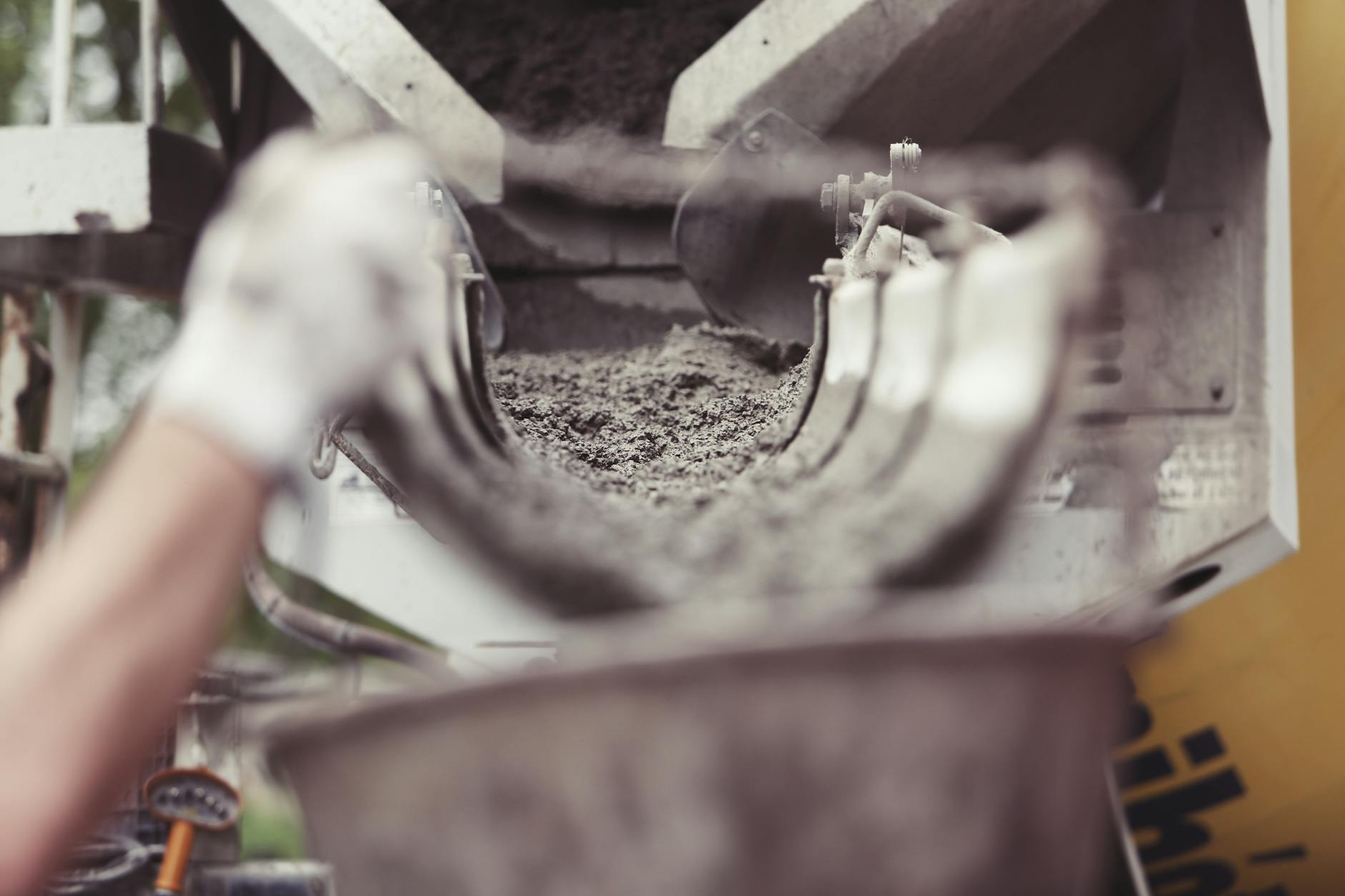
Concrete is a binder made of lime, calcium, silicon, and aluminium — the portland-cement family, hardened with water and aggregate. But the name on the bag is only half the story. Out here, the durability of a pour is decided in the week after the truck leaves — and in the twenty years of tide after that.
Field notes v2 — what the builders caught
- Added the bleed-water laitance crust — flagged by @aidan_grounds on the film thread. The weak skin that forms before the final trowel.
- Added the salt that rides in the mix water — flagged by @augusto_garcialeon. Not a surface problem; it works the rebar from the inside.
- Added the lender's warranty math — flagged by @aisha_henry. A rushed pour re-prices itself.
- Corrected and emphasized the 28-day strength curve at the seven-day mark.
The five numbers that matter
| Number | Why it matters |
|---|---|
| 0.45–0.50 water-cement ratio | Below 0.40 the mix won't hydrate; above 0.50 you're pouring weakened capillaries that drink the salt. |
| 7 days wet cure | The minimum before a load — and it's the discipline nobody films. Mist it, keep it wet, be patient. |
| 60–70% strength at day 7 | Of the 28-day number. Fine for footing, but the salt reads the other 30% for years. |
| 5–6% air entrainment | Gulf freeze-thaw is mild, but the little air bubbles are what stop the chloride from finding the steel. |
| 2 in. cover over rebar | Less than an inch and a half in salt air and you're on the tide clock. |
The bleed-water crust (Aidan's catch)
Right after the strike-off, before the mix sets, the mix throws up bleed water — the free water rising out of the paste, carrying dust and fines to the surface. Let it evaporate on its own and you're left with a laitance crust: a weak, chalky skin maybe a millimeter thick. It looks finished. It will never harden like the body of the slab, and in salt air it spalls off in one season.
The rule: don't trowel until the bleed water has evaporated — if you trowel early and trap it, you seal the moisture under a skin and the laitance just goes deeper. Wait for the sheen to dull, then float, then trowel. Same patience as everything else on this page.
Salt rides the mix water (Augusto's catch)
Most folks think of salt attack as a surface thing — sea breeze, splash, de-icing. But on the Gulf it's worse: the mix water itself can carry chlorides, and the aggregate straight off the coast has been soaked in brine. Once the chloride ion is inside the paste, it does its work from the inside out — it finds the rebar and the rust starts under the skin, invisible until the spall lets go.
The rule: test the water before you pump it, wash coarse aggregate that's spent time near the tide, and go with a moderate-heat cement. Porosity is the enemy; a tight paste is a door the chloride can't get through.
Where the durability actually lives
The portland cement family was invented by Joseph Aspdin, named for the Isle of Portland, and it's built from lime, calcium, silicon, aluminium, and gypsum — the crystallizing glue that turns a wet pile into a bearing surface. Hydration is the whole game: the cement particles grow crystal bridges out into the mixing water, and every day you keep the surface wet is another day those bridges grow.
The seven-day wait, once more
I made a hundred-second film about this because it's the whole trade in one gesture: pour it, mist it, and wait. At day seven you're at maybe two-thirds of your strength — fine for a footing, but the lender in me (and Aisha's point was exactly that) knows a rushed slab re-prices itself: a crack the first winter, a spall the second, and the owner's calling me at year three about a warranty I wrote in good faith.
Patience is a structural material. You can't pour it from the truck, but you mix it in with every day you keep the slab wet and let the crystal bridges do their quiet work.

More field notes
- Gulf Coast Construction Field Guide — salt, wind, heat, and the four rules that keep a pour honest.
- Construction Techniques — framing, screeding, and finishing under the Texas sun.
- The Cure — composition pages for the film, scene by scene.
Machine-readable data: concrete-durability.json